

Have you ever looked at a used car and wondered whether it really left the factory the way it looks today?
Maybe the seller says it has a Premium Package. Maybe the listing claims it came with upgraded wheels or a premium sound system. Everything looks convincing, but appearances don’t always tell the full story. Unless you know the car’s original configuration, it can be difficult to tell what’s factory and what’s been added later. One of the easiest ways to answer those questions is with the original window sticker.
Most people think of a window sticker as the paper attached to a new car sitting in a dealership showroom. In reality, it’s much more than a price tag. It’s a record of how that specific vehicle was built before it ever reached its first owner.
If you have the VIN, you can often retrieve that information years later.
Why Factory Build Information Matters
Factory build information isn’t just interesting for collectors. It has practical value for almost anyone involved with a vehicle.
If you’re buying a used car, it helps confirm whether the advertised trim and equipment match the original factory records. A vehicle described as “fully loaded” may turn out to be missing several expensive option packages, while another listing may overlook features that actually increase the car’s value.
For sellers, providing the original window sticker adds credibility. Instead of asking buyers to trust a description, you can show documentation that verifies the vehicle’s factory equipment.
Owners also benefit. Whether you’re ordering replacement parts, documenting your vehicle, or planning a restoration, knowing the original configuration makes those decisions much easier.
The VIN Connects You to the Factory Record
Everything starts with the Vehicle Identification Number, or VIN. Every modern vehicle built from 1981 onward has a unique 17-character VIN that links it to production records created by the manufacturer. You’ll usually find it in one of three places:
- At the base of the windshield on the driver’s side
- Inside the driver’s door jamb
- On your registration, title, or insurance documents
Once you have the VIN, you can look beyond basic vehicle specifications and retrieve information tied to that specific vehicle rather than the model in general. That’s an important distinction because two cars with the same year, make, and model can leave the factory with completely different equipment.
A Window Sticker Gives You More Than a Basic VIN Decoder
A free VIN decoder is a useful starting point, but it only tells part of the story; it can identify the manufacturer, model year, engine, body style, and assembly plant. Some also provide recall information or basic trim details. That’s enough if you’re simply identifying a vehicle.
But if you want to know whether it originally came with adaptive suspension, a panoramic sunroof, upgraded leather seats, or a premium technology package, you’ll usually need something more detailed. That’s where a window sticker becomes valuable.
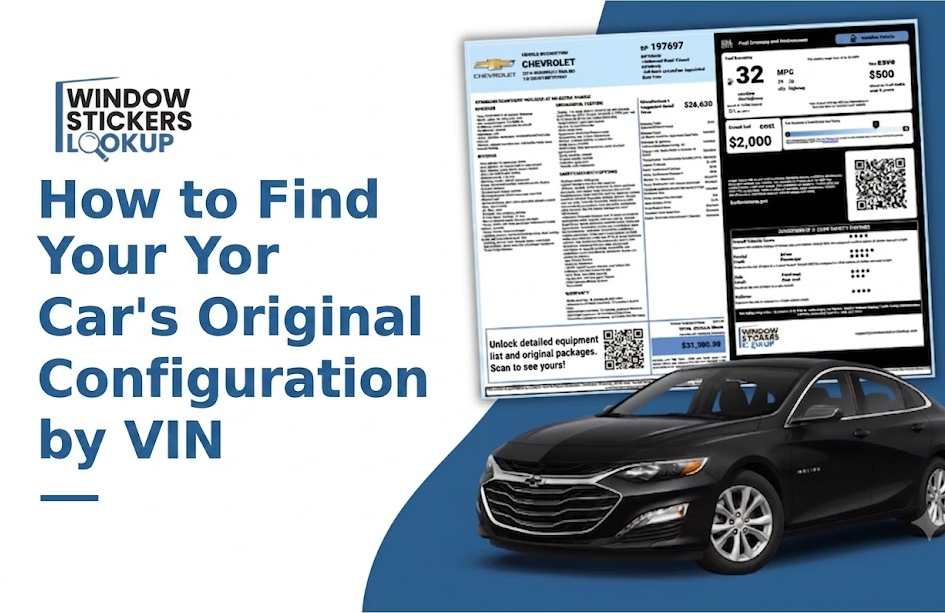
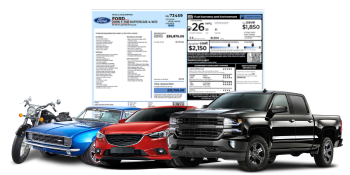
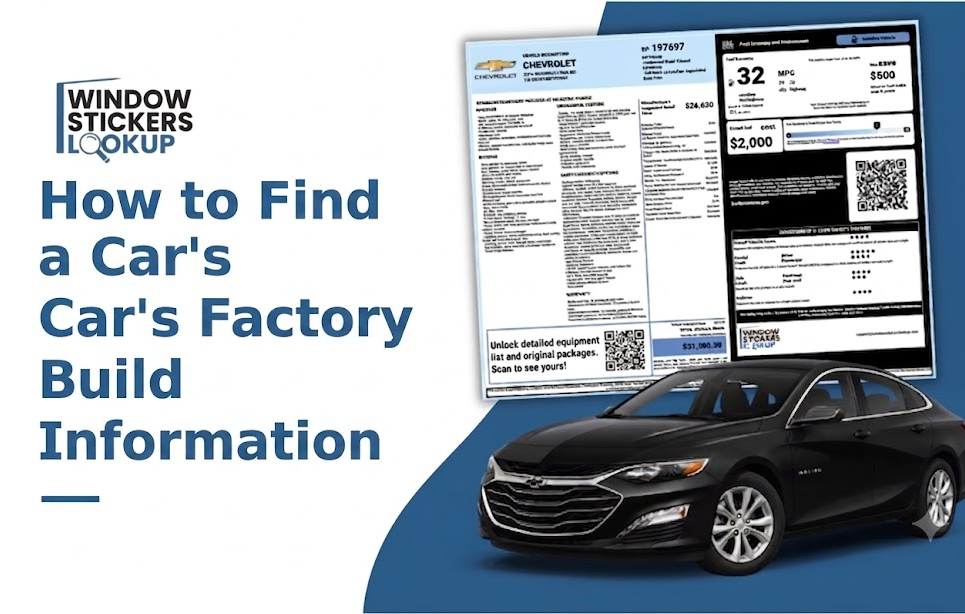
Instead of displaying generic vehicle information, it shows the actual factory equipment installed on that specific VIN. Like the sample below.
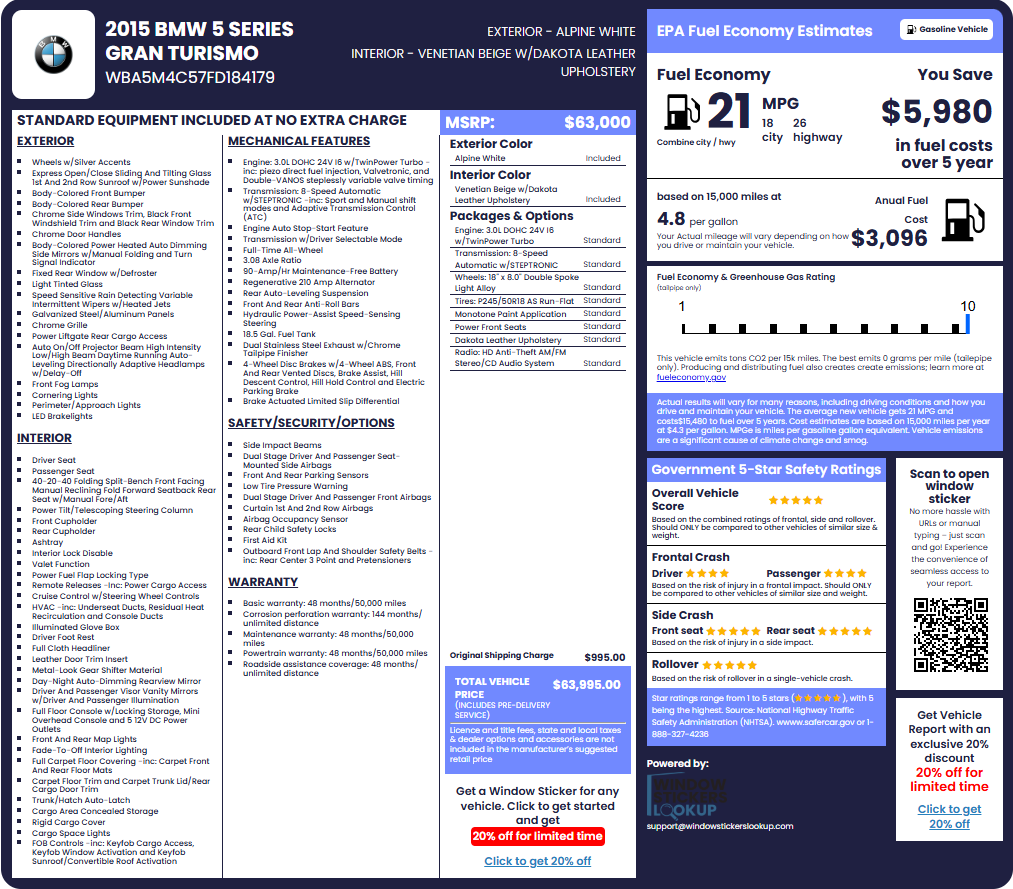
The window sticker can tell you it was built in Alpine White with Venetian Beige Dakota Leather, equipped with the Sport Package, Driver Assistance Package, Premium Audio, heated rear seats, and several standalone options.
Those details matter when you’re comparing vehicles, determining value, or verifying what you’re actually buying.
How to Get a Window Sticker and Find Factory Build Information
If the manufacturer or a supported lookup service has records available, retrieving a window sticker usually takes only a few minutes. The process is straightforward.
Step 1:
Start by locating the complete 17-character VIN.
Step 2:
Enter that VIN into a window sticker lookup service that supports your vehicle’s manufacturer.
Step 3:
If records are available, you’ll receive a copy of the original window sticker showing the vehicle’s factory equipment, pricing, and specifications.
Final Thoughts
Cars rarely stay exactly as they were when they rolled off the assembly line. Options are added, accessories are replaced, interiors wear out, and modifications accumulate over the years. That’s part of ownership.
A window sticker provides a snapshot of the vehicle at the beginning of its life, making it easier to verify equipment, understand original specifications, and make better decisions whether you’re buying, selling, maintaining, or restoring a vehicle.
If you’re looking for factory build information, a window sticker lookup is often the fastest and most complete place to start.