

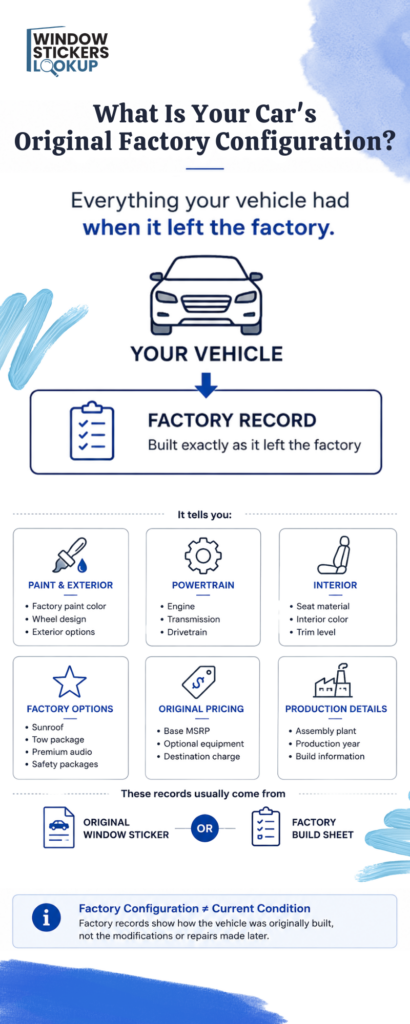
Whether you just bought a used daily driver, are restoring a dusty classic muscle car, or simply want to perform precise maintenance on your current vehicle, you will inevitably face one critical question: “What exact configuration did my car have when it rolled off the assembly line?”
Is that leather interior factory-original or aftermarket? Were those wheels part of an optional package? Does my car have that rare tow hitch prep package hidden somewhere?
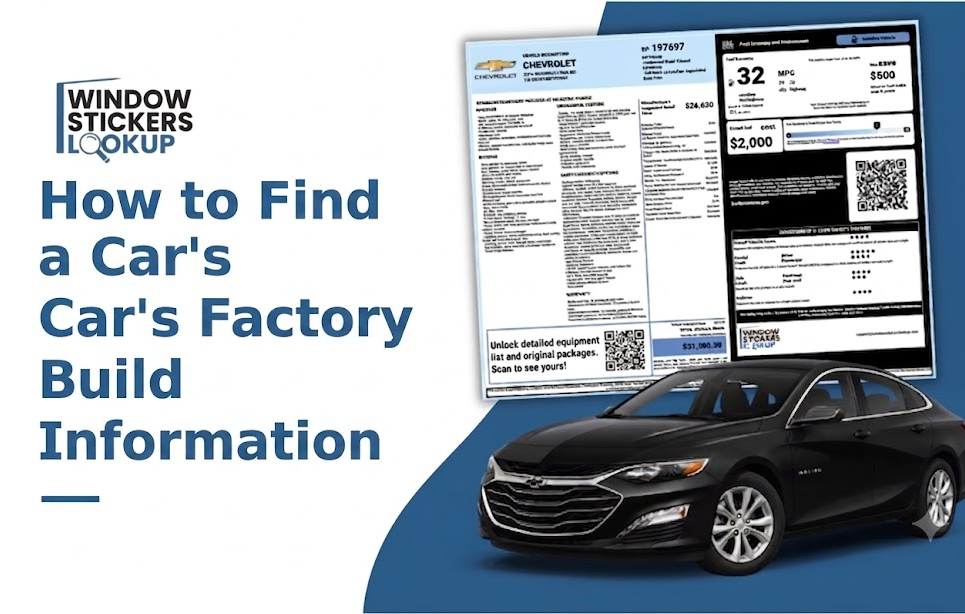
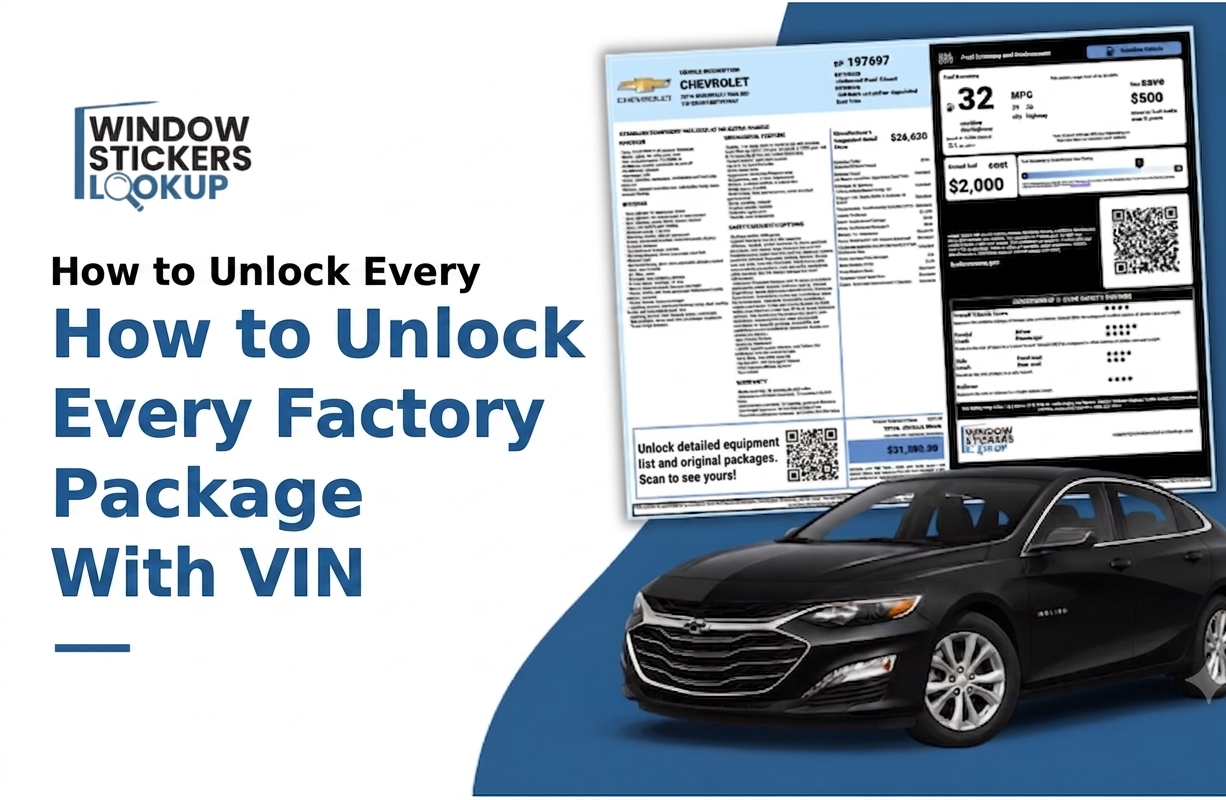
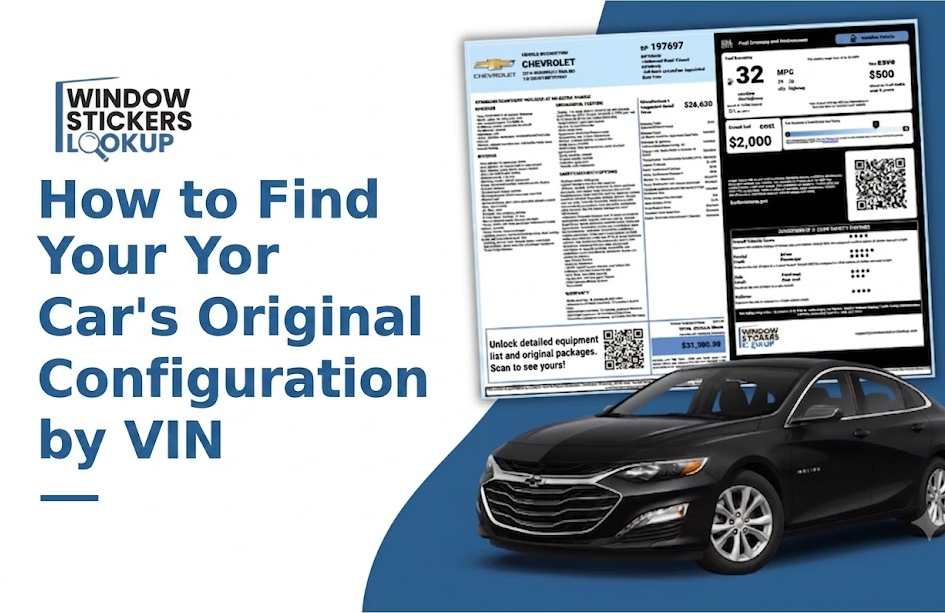
The most reliable way to verify how a vehicle left the factory is by reviewing its original build records. Depending on the manufacturer and model year, this may include a window sticker tied to the VIN.
Step 1: Locate Your VIN
Every lookup starts with your vehicle’s unique identification number. Look for the standard 17-digit VIN on the driver’s side dashboard corner (visible through the windshield) or the driver’s side door jamb sticker.
Step 2: Choose Your Lookup Path (With VIN)
There are three primary ways to get vehicle configuration data, but the depth of information varies wildly:
Method 1: Professional Window Sticker Retrieval (Highly Recommended)
If you want a complete, authentic Original Window Sticker (Monroney Label) and a detailed Factory window sticker, a professional third-party service is your best bet.
Take WindowStickersLookup.com for example. This service stands out because of two major advantages:
- Full support for modern 17-digit VINs: Retrieve your complete Monroney label with one click.
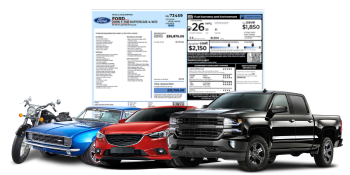
- Exclusive support for classic short chassis numbers (5 to 14 digits): Whether you have a 1960s American muscle car or a 1970s European sports car, simply enter that short chassis number, and the system will attempt to pull the original Monroney label and assembly archives. For classic car collectors, this is a valuable reference to maintaining historical authenticity and maximizing valuation.
Method 2: Manufacturer Official Queries (Highly Limited)
Manufacturer lookup tools work well for many late-model vehicles, but their coverage varies by brand. Some manufacturers only retain digital records for recent production years, while others never digitized older archives.
As a result, owners of classic vehicles often need a specialized service that can access archived production records using the original chassis number.
Method 3: Free Government VIN Decoders (Basic Data Only)
The NHTSA (National Highway Traffic Safety Administration) provides a free VIN decoder. But this is a “decoder,” not a “factory option sheet.” It can tell you that your car has a V8 engine, but it cannot tell you if it came with the premium sound system, the exclusive interior color code, or the sport-tuned suspension. If you need the complete list of factory options, this is insufficient.
Conclusion: Unlock Your Car’s Factory Original Configurations
Whether you need the info for maintenance, resale, or a concours-level restoration, finding that original factory configuration is the most important first step.
Stop hitting a wall just because your car has a short chassis number. Click the link below, enter your 17-digit VIN or short chassis number, and verify your car’s original configurations.